Beroe cucumis Fabricius 1780Common name(s): Melon comb jelly, Northern comb jelly, Beroe comb jelly |
|
| Synonyms: | 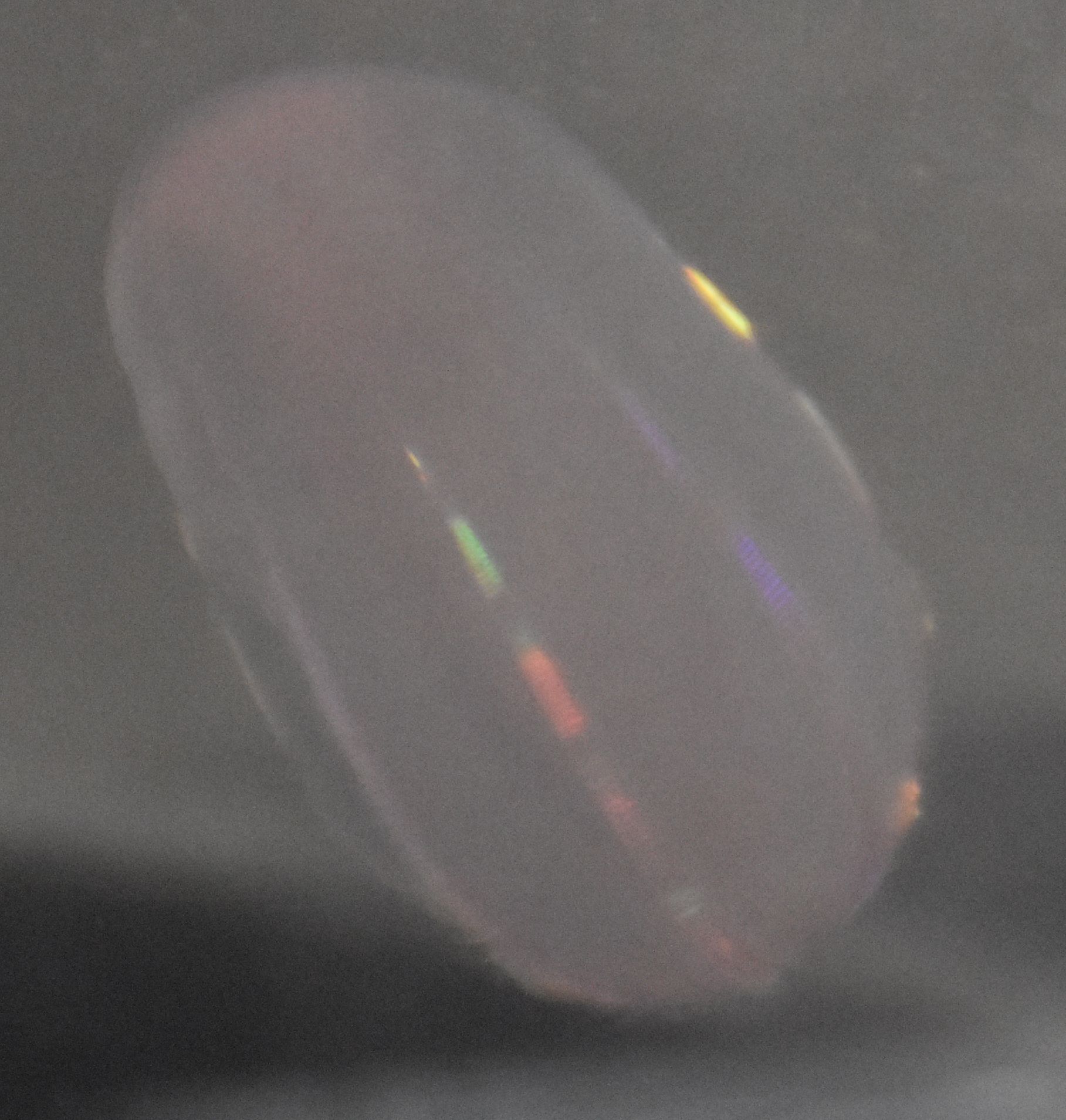 |
|
Class Nuda
Order Beroida
Family Beroidae
|
|
| Beroe cucumis, about 4 cm long, captured at night from the Cornet Bay docks by Jamie Fields. | |
| (Photo by: Dave Cowles, July 2026) | |
Description:Beroe is the only genus in the Ctenophore Family Beroidae, Order Beroida, and Class Nuda. All members of Class Nuda (that is, genus Beroe) have no tentacles. B. Cucumis is oval (like a watermelon, short cucumber, or blimp). Its cross-section is generally circular or nearly so, though it can be slightly flattened. Its length is up to about 10 cm. Its eight comb rows (called ctene rows) start at the aboral end. Some of them extend about halfway to the mouth end, while the rest extend about 2/3 of the way. It often has a translucent pink or lilac color, especially near the ctene rows and mouth (photo), or it may be colorless. The eight meridional canals from the gut have some side branches which are visible through the surface and do not anastomoze with each other to form an extensive network.
How to Distinguish from Similar Species: Ctenophores which are not in Class Nuda have at least some tentacles. They also have a sack-like body. While This species has a pink or lilac colorration, Beroe sp. has brownish spots and B. abyssicola is a strong red, purple, or black color.
Geographical Range: Alaska to California
Depth Range: Surface to 400 m
Habitat: Pelagic
Biology/Natural
History: This species
is a predator on other
ctenophores
and salps.
It is famous
for consuming the ctenophore Pleurobrachia.
It has a large mouth and can swim rapidly. It is said to be
luminescent.
While swimming, Beroe beats its ctene
rows in a metachronal pattern (waves of beating passing
sequentially
along the ctene row) in a retrograde fashion: It swims mouth forward (photo),
and as tit swims forward, the waves of beating proceed from the
posterior
(aboral)
end to the anterior
(mouth) end.
| Return to: | |||
| Main Page | Alphabetic Index | Systematic Index | Glossary |
References:
Dichotomous Keys:Carlton 2007
Kozloff, 1987, 1996
General References:
Harbo
2022
Kozloff
1993
Wrobel
and Mills 1998
Scientific Articles:
Web sites:
General Notes and Observations: Locations, abundances, unusual behaviors:
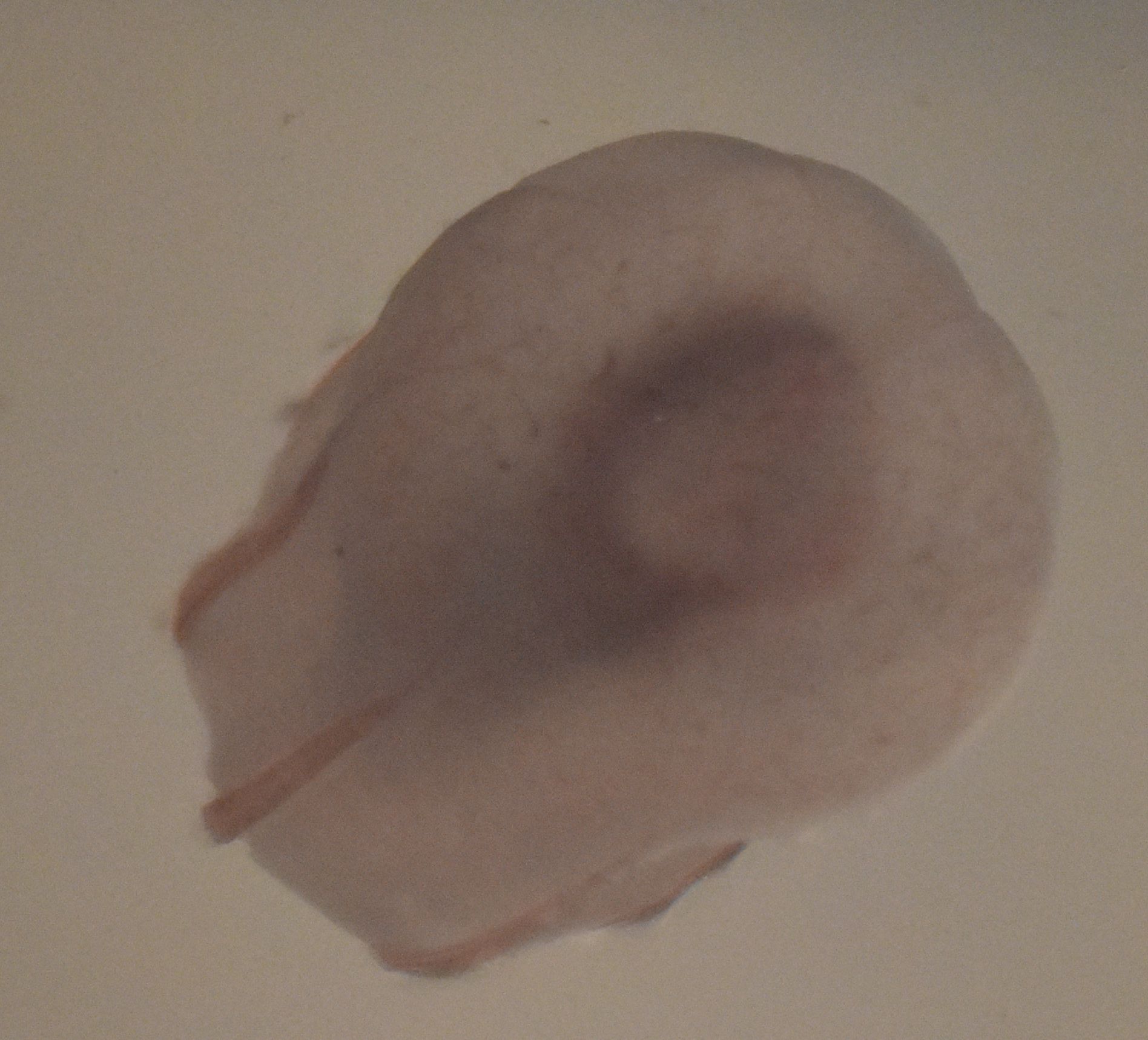
In this view Beroe
is swimming
towards the camera, showing its large open mouth. Photo by Dave Cowles,
July 2026
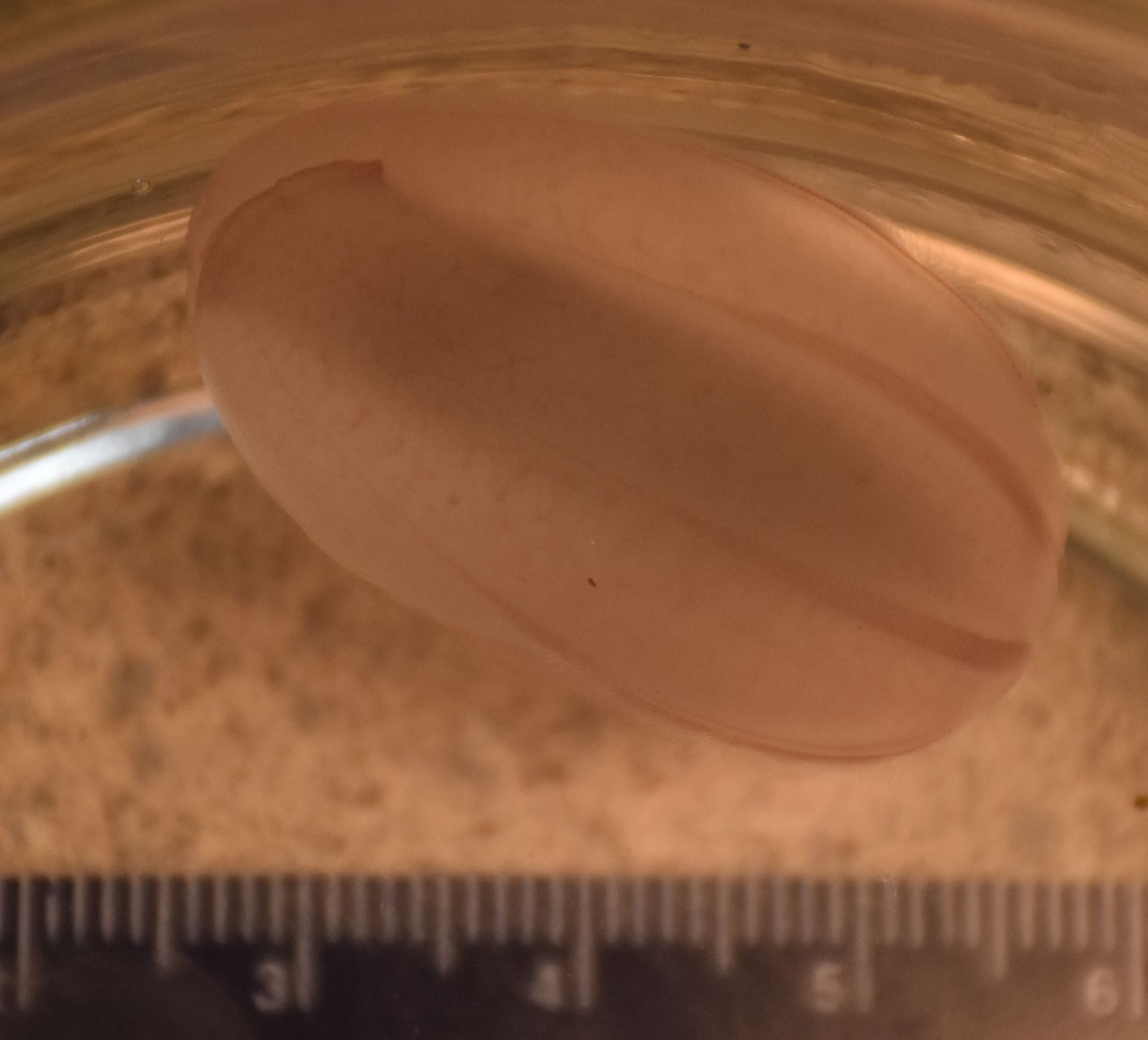
Here Beroe is swimming around a dish toward the
left. The increased
coloration near the ctene
rows and mouth can be seen, as can the ctene rows of
different length.
Photo by Dave Cowles, July 2026. Dimensions shown are millimeters and
centimeters.
Authors and Editors
of Page:
Dave Cowles (2026): Created original page
CSS coding for page developed by Jonathan Cowles
Salish Sea Invertebrates web site provided courtesy of Walla
Walla University