Cerebratulus californiensis Coe, 1905Common name(s): |
|
| Synonyms: | 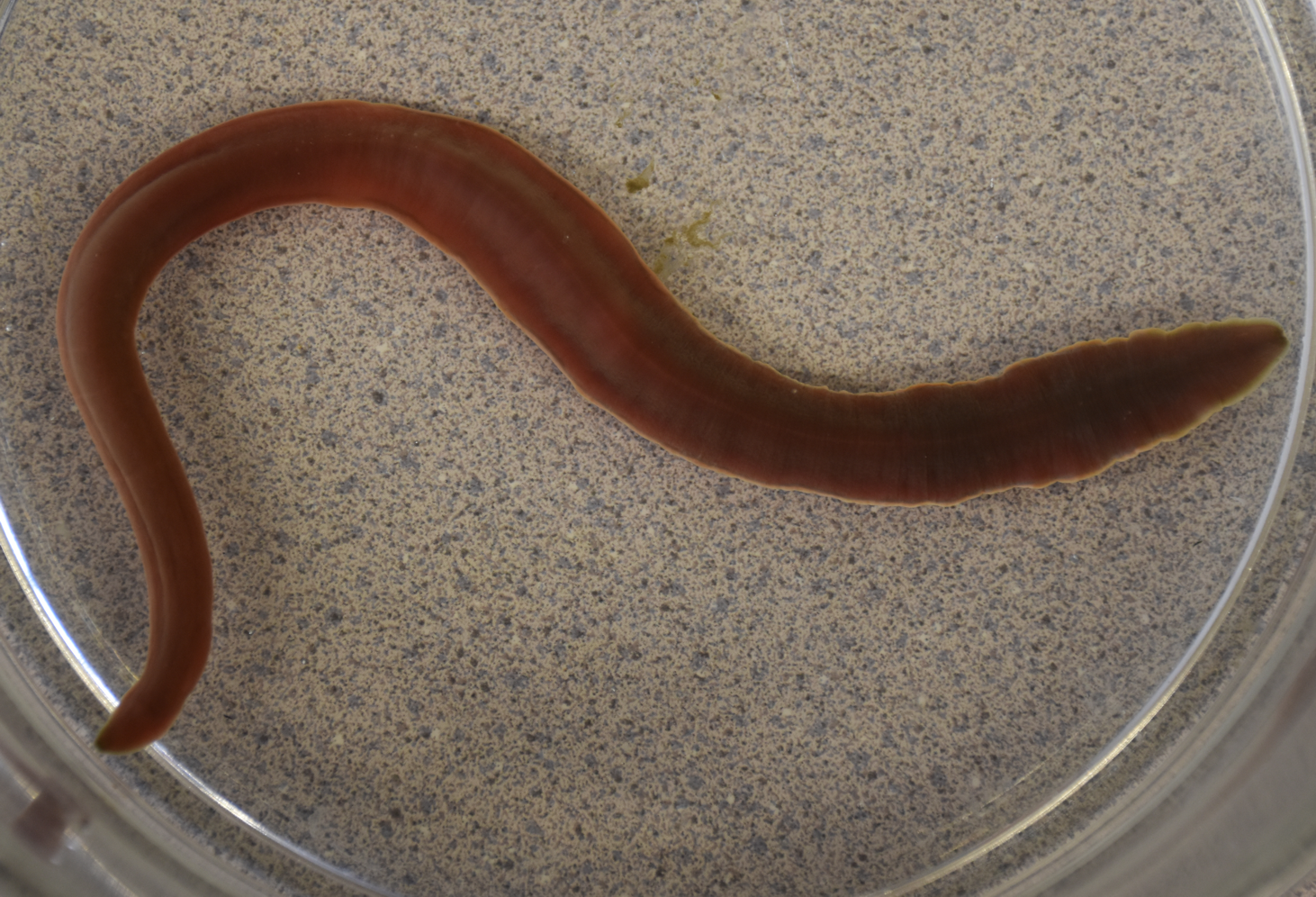 |
|
Class Anopla
Order Palaeonemertea
Family Lineidae
|
|
| Cerebratulus californiensis found at night off Cornet Bay dock by Jamie Fields, June 2026. In this state of relaxation the animal is 20 cm long. Its head is to the left. | |
| (Photo by: Dave Cowles, June 2026) | |
Description: As a member of Class Anopla, this species has a mouth separate from the proboscis pore, both of which open on the ventral side of the animal rather than being united and at the very front tip. The front of the species is pointed and flattened, with no visible ocelli (eyespots). As a membr of Order Heteronemertea, it has cephalic slits, which are large and are on the sides of the head in this species. It has a caudal cirrus but loses it readily. When contracted it may be as short as 5-6 cm long and well over 1 cm wide (especially at the rear), but it can also extend well beyond 20 cm, especially when swimming. The rear part of its body is wider and flatter than the anterior part, especially when swimming, while the anterior part may be partly cylindrical with flattened edges. The region behind the head is slightly narrowed. The color is dull red, yellowish, or rose-gray, or sometimes greenish-brown, with a narrow band of lighter color along some of the margin but no white on the head. IThe ventral underside is nearly the same color as the dorsal side. t is fragile and breaks easily.
How to Distinguish from Similar Species: Several other Cerebratula species are brown. C. longiceps has a nuch lighter underside. C. marginatus is also pale ventrally, does not break so easily, and can be up to 1 m long.
Geographical Range: Pacific coast from southern British Columbia to Mexico.
Depth Range: Intertidal to 50 m depth
Habitat: Protected areas, Benthic on soft sediments but can swim readily
Biology/Natural
History: Feeds
mostly on polychaetes
in the sediment. Breeds during May and June in S. California and in
June
at Monterey Bay. When crawling this species sometimes lays down a very
thick mucus trail. Its predatory eversible
proboscis
is also covered
with mucus, which seems to incapacitate its prey worms when it attacks
them. It does not have piercing stylets in its proboscis.
| Return to: | |||
| Main Page | Alphabetic Index | Systematic Index | Glossary |
References:
Dichotomous Keys:Carlton, 2007
Kozloff, 1987, 1996
General References:
Kozloff,
1993
Lamb
and Hanby 2005
Morris
et al. 1980
Scientific Articles:
Web sites:
General Notes and Observations: Locations, abundances, unusual behaviors:
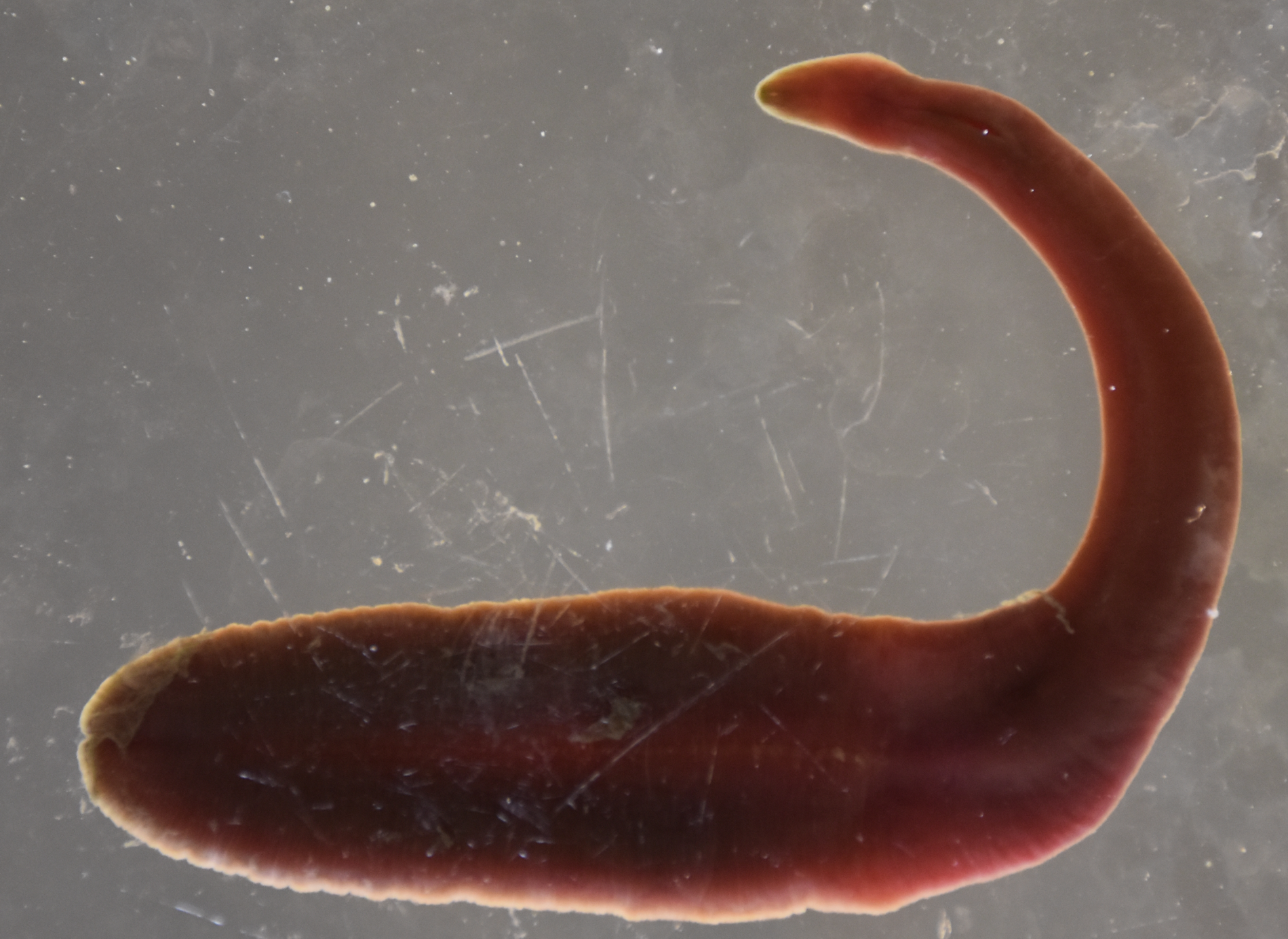
This view of the underside shows that the ventral side is a similar
color as the dorsal side. Its head is above on the right. Photo by Dave
Cowles, July 2026
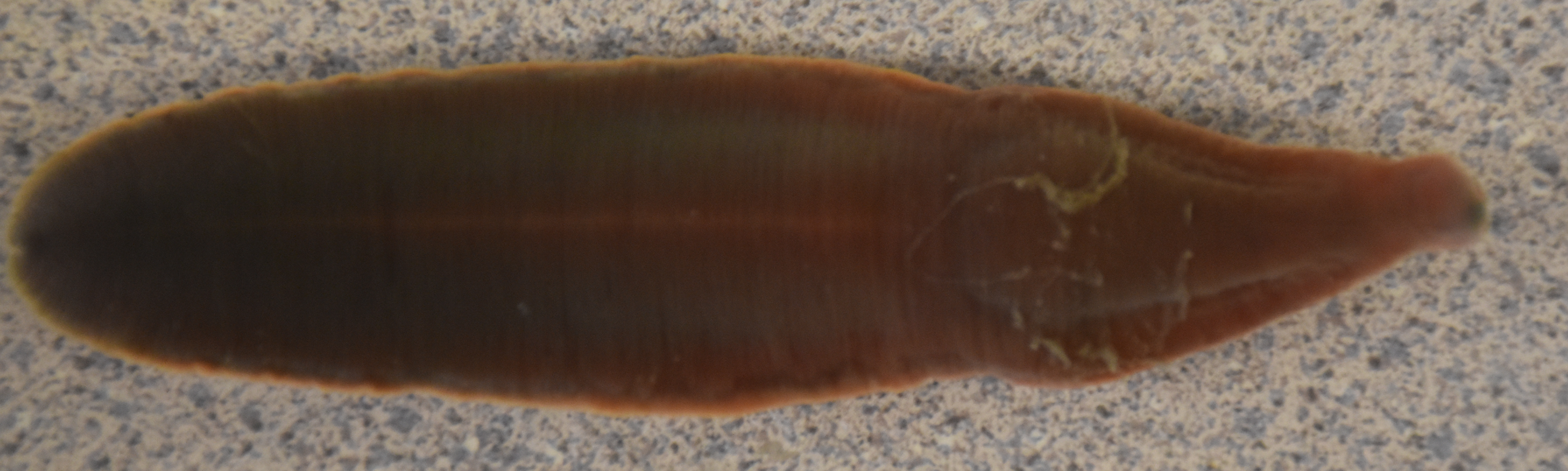
When contracted, this individual may be as short as 10 cm. Its head
is to the right. Photo by Dave Cowles, July 2026

This closeup of the head shows the narrowed neck and some of the
texture.
The animal has its head raised up from the substrate at about a 45
degree
angle toward the camera. Photo by Dave Cowles, July 2026
Authors and Editors
of Page:
Dave Cowles (2026): Created original page
CSS coding for page developed by Jonathan Cowles
Salish Sea Invertebrates web site provided courtesy of Walla
Walla University