Conchoderma auritum (Linnaeus, 1767)Common name(s): Rabbit-ear barnacle, stalked whale barnacle, stalked golden whale barnacle, goosneck whale barnacle |
|
| Synonyms: Conchoderma leporinum, Lepas aurita | 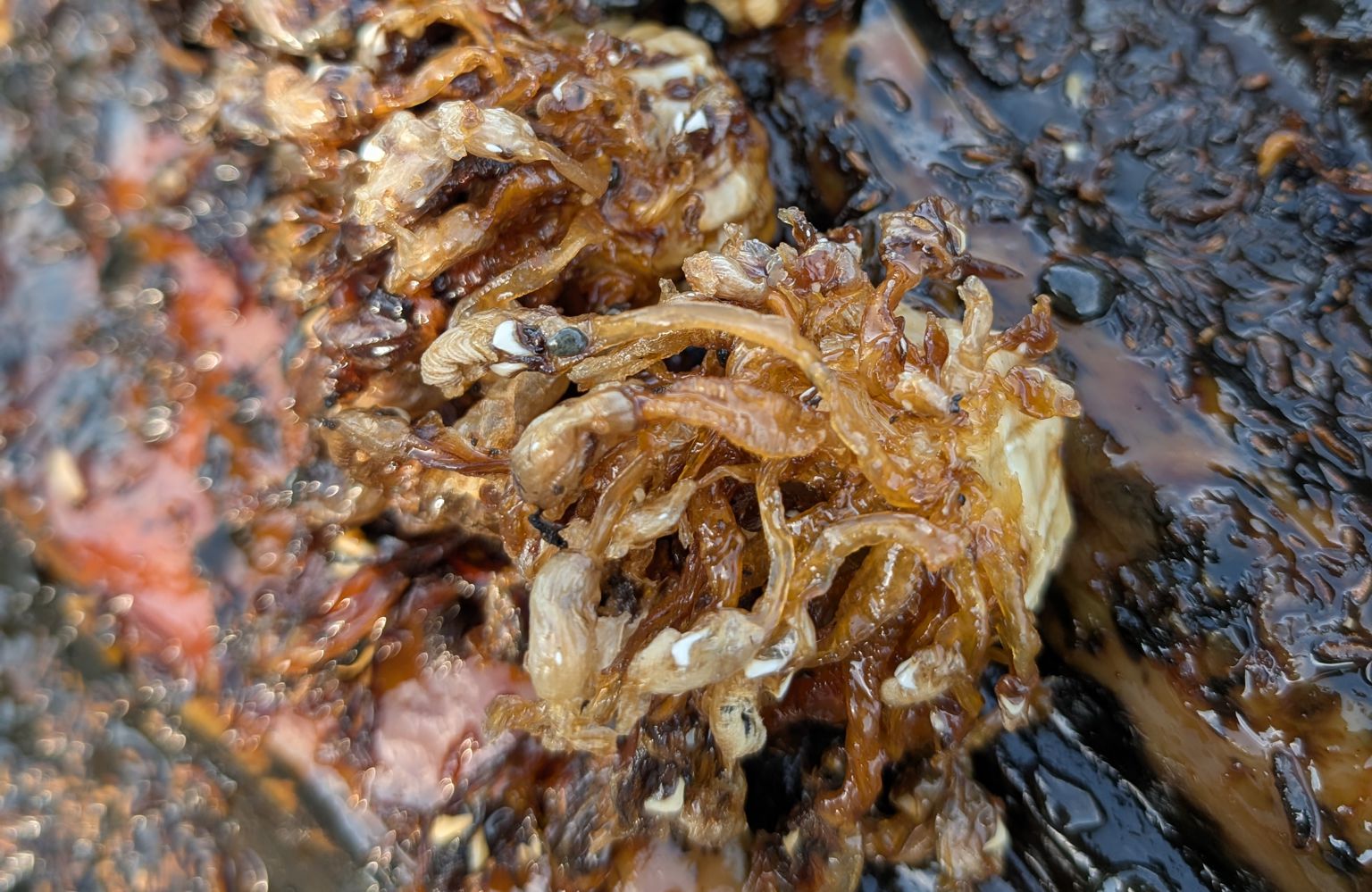 |
|
Phylum Arthropoda
Subphylum Crustacea
Class Thecostraca
Superorder Thoracica
Order Pedunculata
Family Lepadidae
|
|
| Conchoderma auritum, about 6 cm long, attached to a Coronula diadema barnacle on the skin of a humpback whale. | |
| (Photo by: Dave Cowles, July 2026 ) | |
Description:
How to Distinguish
from
Similar Species: Its sister species is Conchoderma virgatum,
attaches to many drifting objects, sometimes benthically, as well as to
whales and fish. Its color is gray with purplish stripes.
Its capitulum has 5 plates, which cover about 1/2 the total height
of the barnacle.
Geographical Range:
Worldwide, northern and southern hemispheres.
Depth Range:
Wpipelagic (on whales)
Habitat:
Attach to Coronulid barnacles on whales.
Biology/Natural
History:
This stalked barnacle species has been observed on several whale
species, and even on a porpoise. It attaches to Coronulid barnacles
such as Coronula diadema, which in turn attach to whales, especially humpback whales.
| Return to: | |||
| Main Page | Alphabetic Index | Systematic Index | Glossary |
References:
Dichotomous Keys:
General References:
Scientific Articles:
Cornwall, I.E., 1927. Some North Pacific whale barnacles. Contributions Canadian Biol. Fish. 3 pp. 503-517
Cornwall, I.E., 1955. The barnacles of British Columbia. Br. Col. Prov. Mus. Dept. Educ. Handbook No. 7 pp. 5-69
Newman, W.A. and A. Ross, 1971. Antarctic cirripedia. American Geophysical Union of the National Academy of Sciences Antarctic Research Series 14 pp. 1-257
Nilssn-Cantell, C-A, 1939. Thoracic cirripedes collected in 1925-1936. Discovery Rep. 18 pp. 223-238
Scarff, James E., 1982. Occurrence of the barnacles Coronula diadema, C. reginae and Cetopirus complanatus (Cirripedia) on Right Whales. Scientific Report Whales Research Institute No. 37 pp. 129-153
Web sites:
General Notes and
Observations: Locations,
abundances, unusual behaviors:
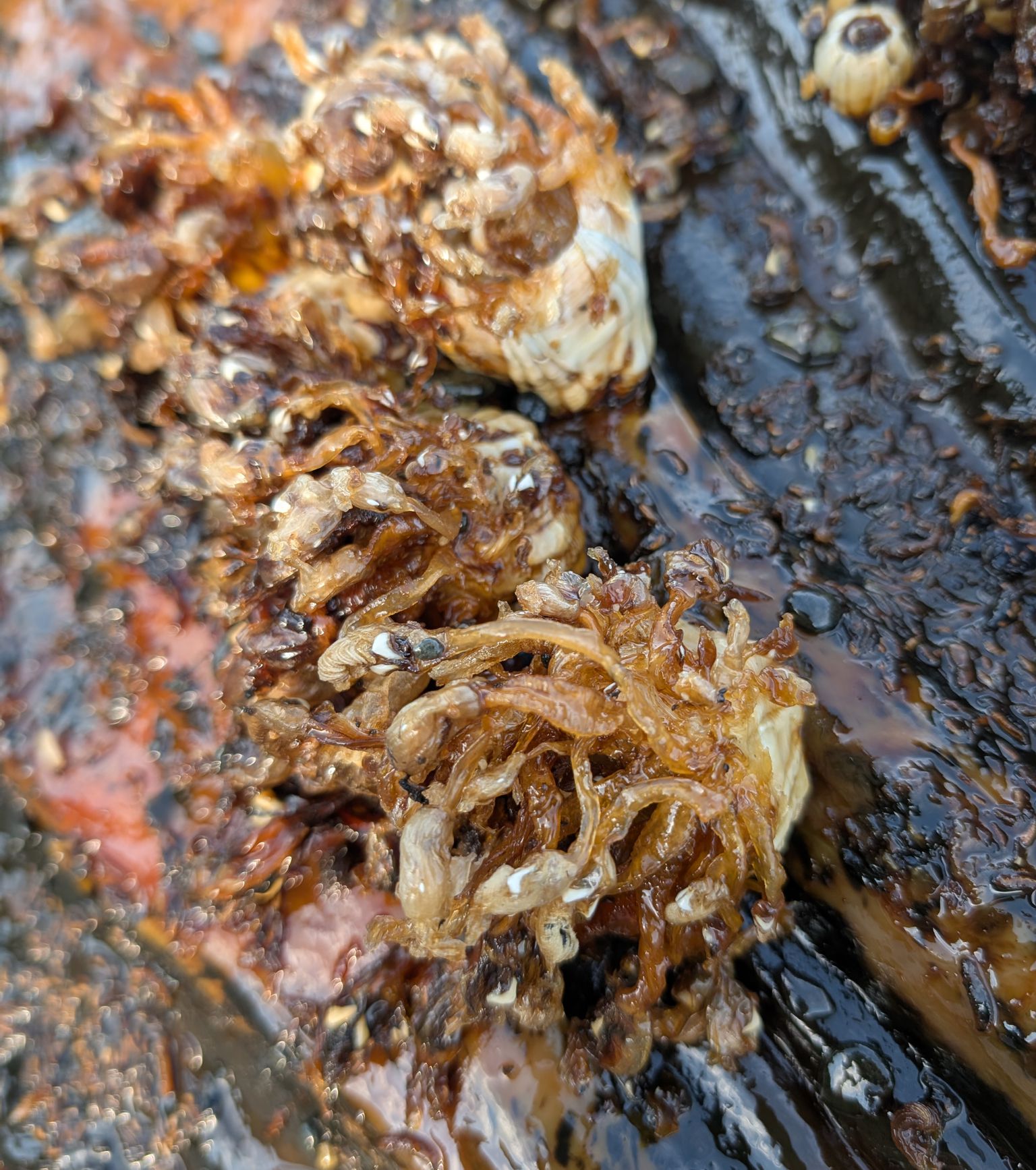
This larger photo shows individuals attached to the Coronula diadema barnacles on humpback whale skin.
Authors and Editors
of
Page:
Dave Cowles (2026): Created original page
CSS coding for page developed by Jonathan Cowles
Salish Sea Invertebrates web site provided courtesy of Walla Walla University