Solen sicarius Gould, 1850Common name(s): Jackknife clam, sickle jackknife clam, sickle razor clam, blunt razor clam, fast jackknife clam |
|
| Synonyms: | 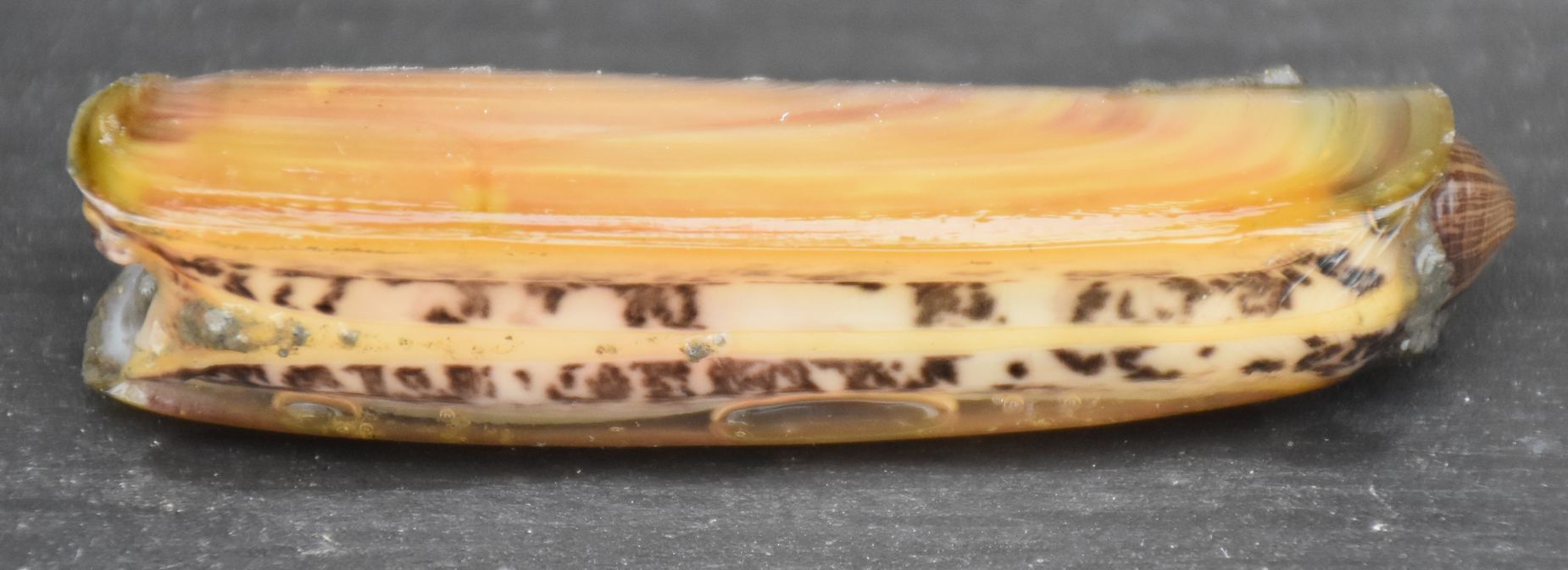
 |
|
Phylum Mollusca
Subclass Heterodonta
Order Veneroida
Family Solenidae
|
|
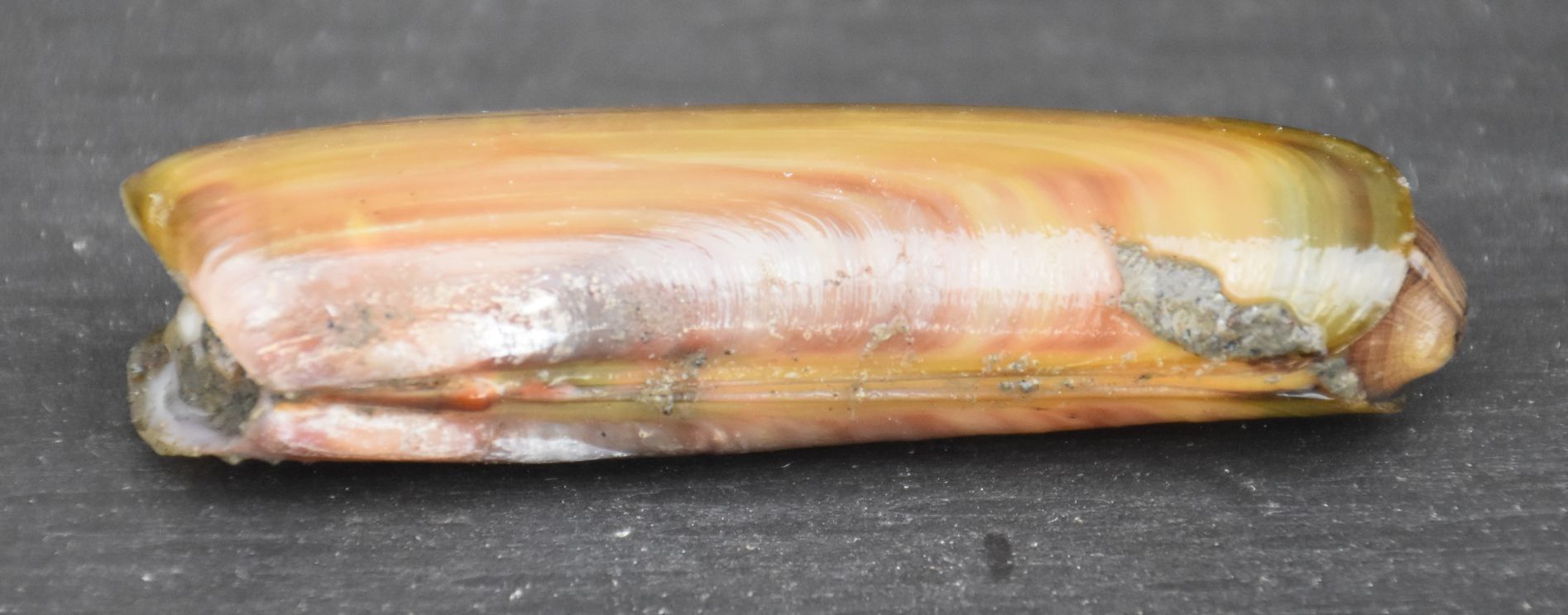
| Solen sicarius, 5 cm long, dug out of mud in the low intertidal of March Point, Padilla Bay. Ventral (see top) and dorsal (see lower) views. The anterior end is to the left in both photos. Note the siphons slightly protruding from the posterior end, and that the posterior end is more rounded than the posterior end. The dorsal side (see lower view) is slightly concave in profile. | |
| (Photos by: Dave Cowles, July 2026) | |
Description: This species, the only member of its family Solenidae in this area, is a small, long, slender clam with a smooth, shiny periostracum that projects only very slightly if at all beyond the calcified portion of the shell.The shell itself is quite thin and about 4 times as long as high. The periostracum is glossy yellowish brown or yellowish-green, ususlly of several different shades.The shell gapes at both ends and dark-speckled extensions of the mantle bridge the gap between the shells olong the ventral margin (see photo above). The shell interior is dull blue and white and has two adductor muscle scars of similar size. The dorsal side of the shell is slightly concave along the entire length of the shell (photo), and the anterior end of the shell is blunter than the posterior. The hinge ligament is external and the hinge and the beak are near the anterior end. The foot is dark. The siphons are united. Length up to 12.5 cm.
How to Distinguish from Similar Species: This distinctive-looking clam is likely to be mistaken for only a few other local species due to its streamlined shape, its glossy-smooth periostracum, and its distinctive color. All the other similar clams are less than 3x as long as high and do not have a concave dorsal margin. The razor clam Siliqua patula is much larger as an adult, growing as large as 18 cm. long. It lives in sandy areas. The gutless awning clam, Solemya reidi, grows up to 6 cm long and lives in highly organic, strongly anoxic subtidal muds. Its periostracum extends substantially beyond the calcified margin of its shell. Solen rosaceus lives farther south in southern California and has a straight profile along its dorsal side.
Geographical Range: British Columbia to northern Baja California
Depth Range: Intertidal to 54 m. Usually subtidal
Habitat: Muddy sand, sometimes in eelgrass, in sheltered areas.
Biology/Natural
History: Tends
to make lasting vertical burrows about 30 cm deep into hard-packed mud.
It can dig rapidly. Pea crabs are often found residing in the clam's mantle
cavity. This clam is said in Ricketts et al. 1985 to be able
to jump,
to dig into the mud within 30 seconds, and to swim by rapidly expelling
water from its posterior
siphons
or from
an anterior
opening in the mantle
near the foot (presumably letting it swim either forward or backward).
It is presumed to use these unusual skills to escape from predators,
and
jetting water from the anterior
end may also aid in digging its burrow. It may also autotomize
(break off) the end of its siphons
when disturbed.
| Return to: | |||
| Main Page | Alphabetic Index | Systematic Index | Glossary |
References:
Dichotomous Keys:Carlton, 2007
Flora and Fairbanks, 1966
Kozloff, 1987, 1996
General References:
Abbott,
1986
Harbo,
2001
Kozloff,
1993
Lamb
and Hanby, 2005
Morris,
1966
Morris
et al., 1980
Rice,
1972
Ricketts
et al., 1985
Scientific Articles:
Web sites:
General Notes and Observations: Locations, abundances, unusual behaviors:
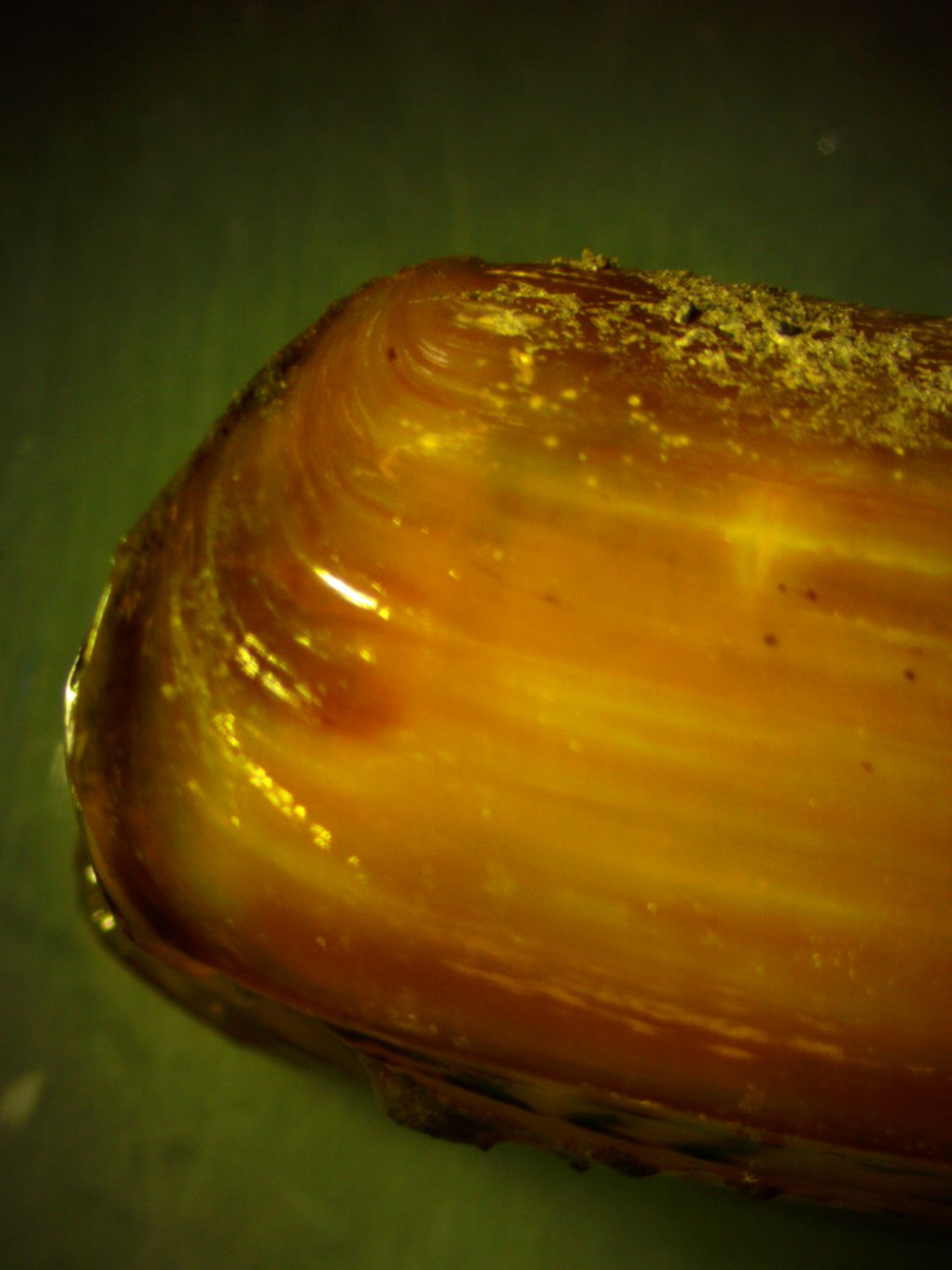
A close-up view of the squared-off anterior end. Note that the beak, visible at the top, is at the extreme anterior end. Photo by Dave Cowles, July 2026
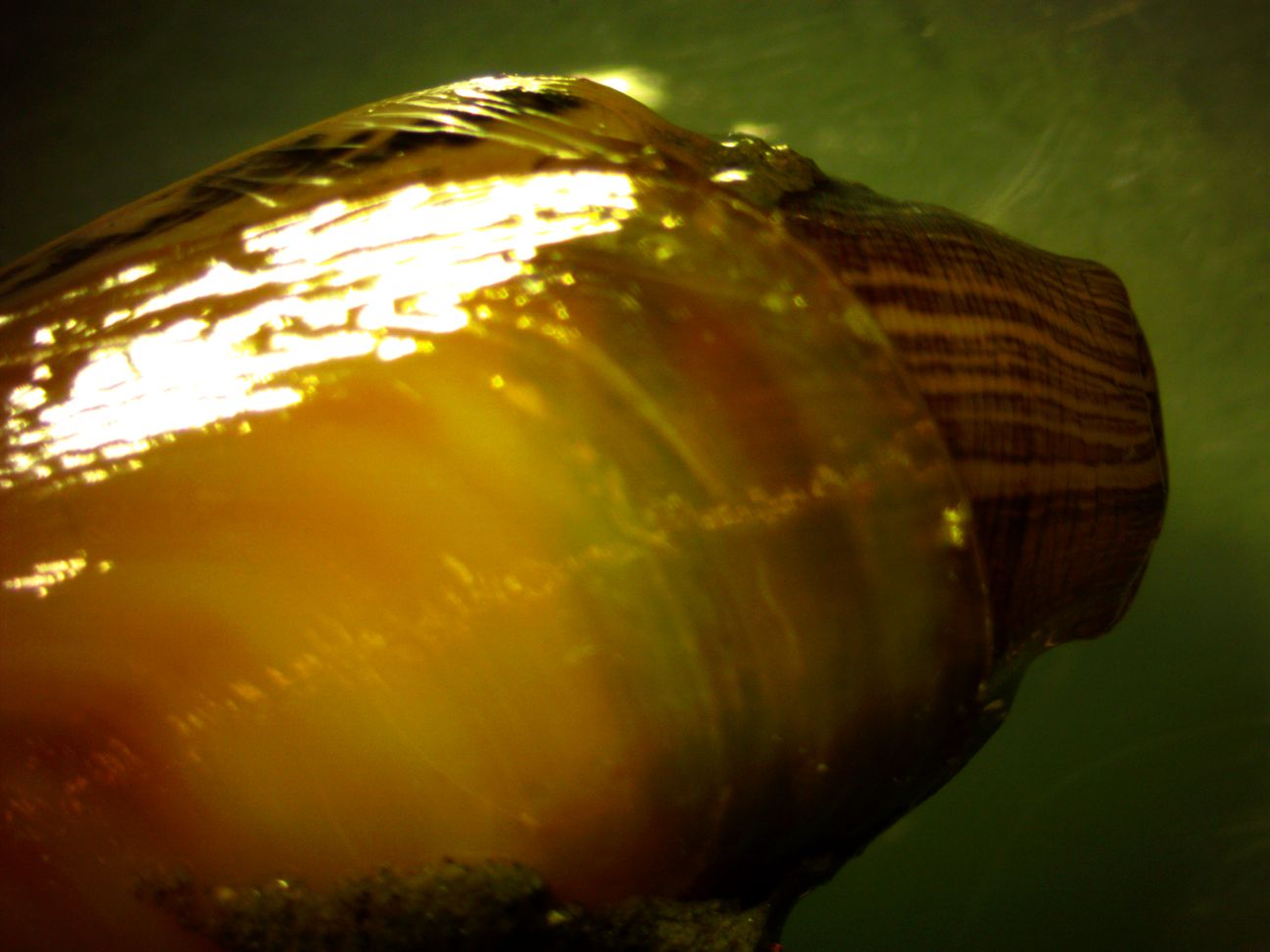
The posterior end (seen with siphons partly extended) is more rounded. Photo by Dave Cowles, July 2026
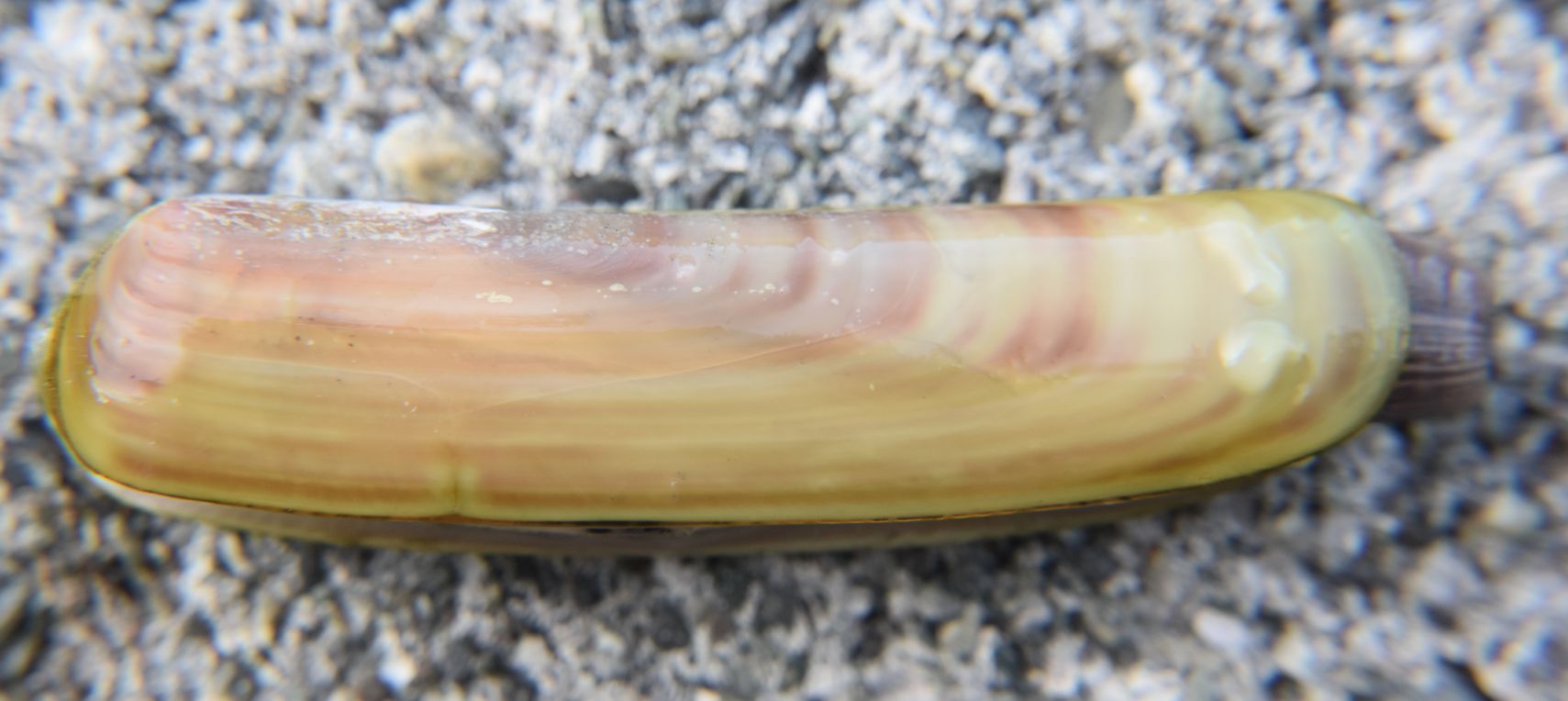
The
dorsal side (upper side in this photo) is slightly concave. The beak is
at the anterodorsal corner, at the top left in this photo. Photo by
Dave Cowles, July 2026
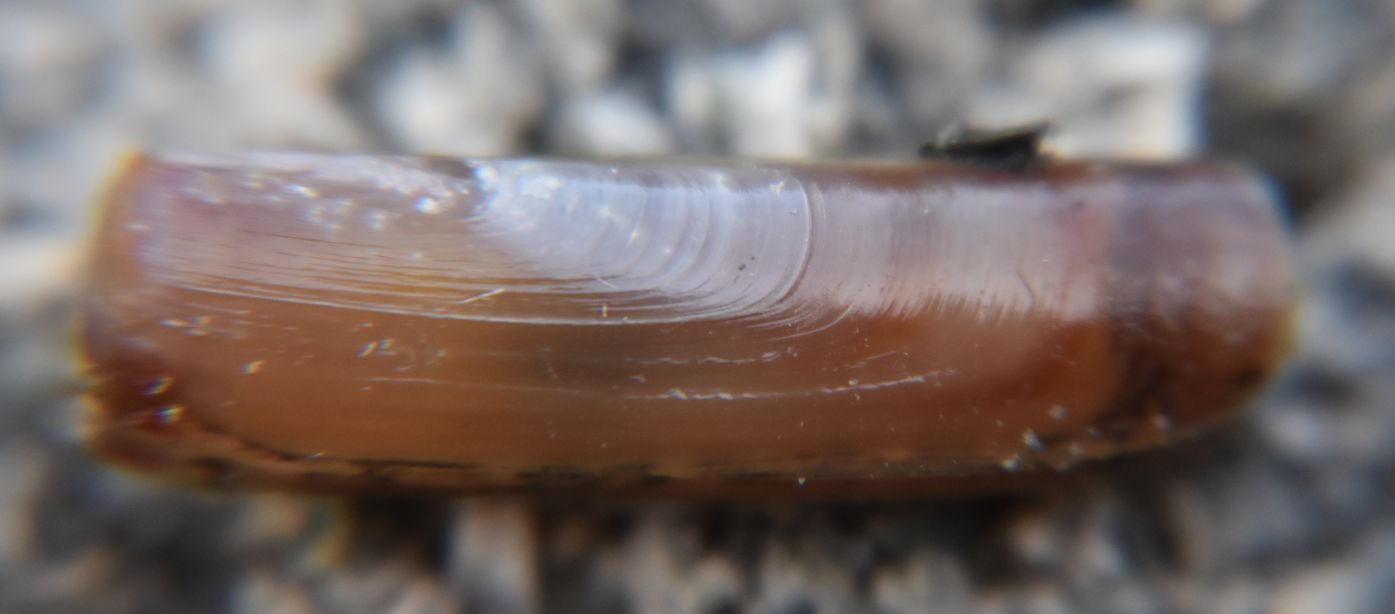
This
individual, collected by benthic grab from a muddy bottom at about 6 m
depth in the Padilla Bay boat channel next to March Point, is 2 cm long
and a reddish-brown color. The dorsal margin of the shell of this
individual is almost straight. Photo by Dave Cowles, July 2026
Authors and Editors
of Page:
Dave Cowles (2026): Created original page
CSS coding for page developed by Jonathan Cowles
Salish Sea Invertebrates web site provided courtesy of Walla
Walla University