Musculus (Musculus) niger (Gray, 1824)Common name(s): Black mussel, little black mussel, black musculus |
|
| Synonyms: | 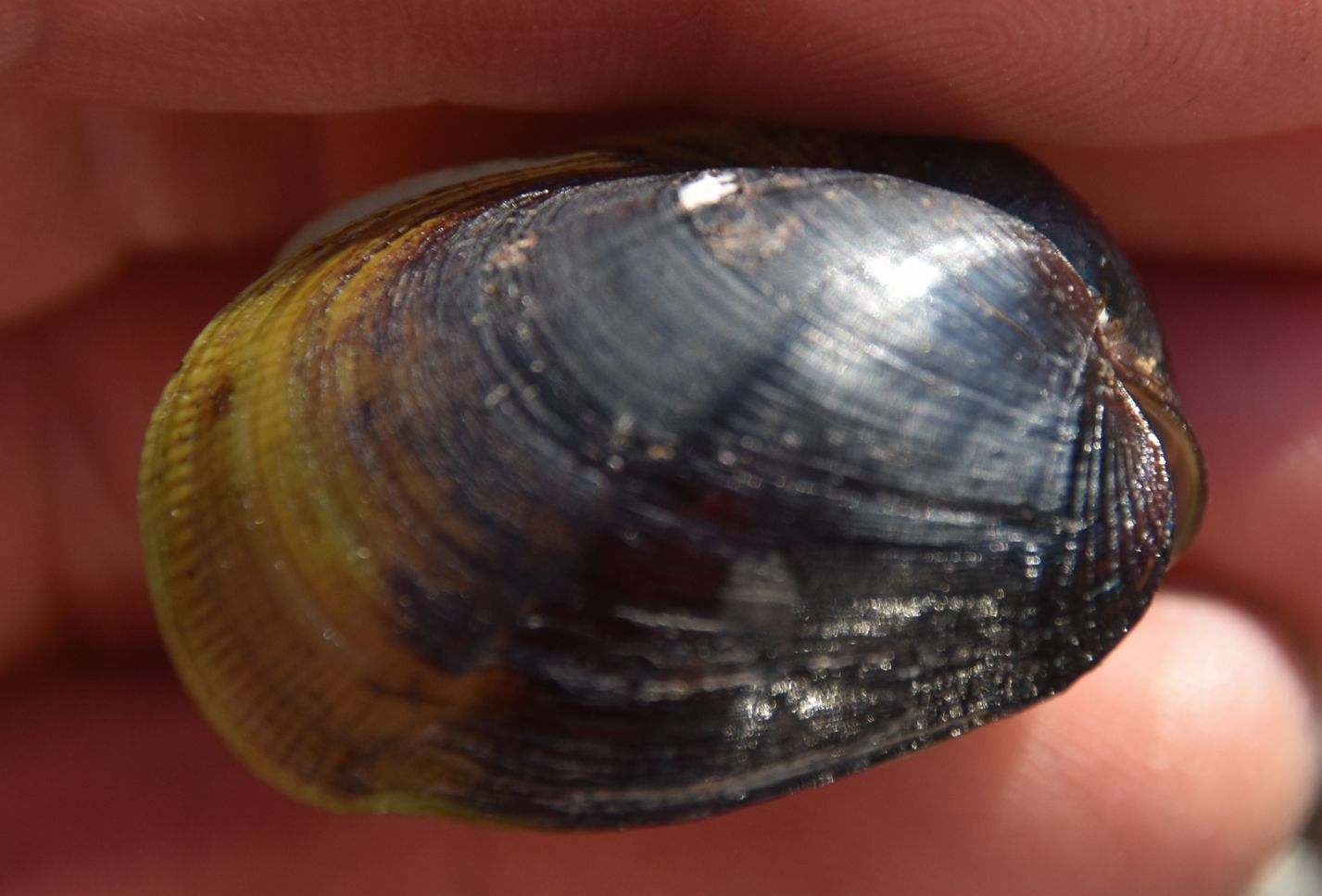 |
|
Phylum mollusca
Order Mytiloida
|
|
| Musculus niger, 3 cm long and 2 cm high, trawled from shell hash at 100 m depth in San Juan Channel. Anterior is to the right and dorsal is at top of photo. Note the pronounced ridge running from the umbo (top right) to about 2/3 of the way back on the ventral margin (bottom left). | |
| (Photo by: Dave Cowles, August 2026) | |
Description: This mussel has a blunt or rounded anterior end, with the umbo near the end. Shell height is slightly greater in the middle than it is at the umbo. The shell is thin but not highly fragile. The periostracum is black, with some regions of olive green or golden. The outside of the anterior and posterior thirds of the valves are covered with fine radial ribs which are also visible inside the mussel. These ribs form a long row of teeth both anterior to and posterior to the hinge ligament along the dorsal margin of the valves, appearing much like taxodont dentition but are not called this in the Kozloff key (and members of the mussel family do not have hinge teeth). The center section of the valves does not have radial ridges but it does have concentric growth lines. In addition, a pronounced ridge runs from near the umbo to about 2/3 of the way posteriorly on the ventral margin, and the shell sculpture is raised posterior to that ridge. The interior is an iridescent light blue. I can see what appears to be only one, large anterior adductor muscle scar but there are also two pairs of dark blotches which may be the anterior and posterior adductor muscle scars. Length to 5.7 (or 8) cm. The width is not greater than the height.
How to Distinguish from Similar Species: Musculus discors has the prominent ridge running from the umbo to the ventral margin but the shell sculpture is raised anterior to the ridge. M. discors also does not have the obvious fine radiating ridges along the anterior and posterior third. Some boring relatives have a width greater than their height, and/or a hairy periostracum on the posterior end plus have no fine network of radial ridges.
Geographical Range: Atlantic, Arctic, and Northeast Pacific oceans down to Willipa Bay, WA.
Depth Range: Intertidal to-300 m, mostly subtidal.
Habitat: Muddy gravel bottoms (shell hash in this case).
Biology/Natural
History: This species
was discovered during Parry's 1822-1824 voyage to find the Northwest
Passage.
It may wrap itself with byssal
threads, presumably for protection.
| Return to: | |||
| Main Page | Alphabetic Index | Systematic Index | Glossary |
References:
Dichotomous Keys:Kozloff, 1987, 1996
General References:
Harbo,
1997
Lamb
and Hanby, 2005
Scientific Articles:
Web sites:
General Notes and
Observations: Locations, abundances,
unusual behaviors:
| Clam length 3 cm, height 2 cm. Covered with a thick periostracum so that it looks like a stubby Mytilus trossulus. The umbones are at the anterior end, which is squared off. Most of the periostracum is black but the posterior third is olive-green or even golden. The hinge ligament is long and internal. It has ridges that end in teeth which look similar to taxodont dentition all along the dorsal side. The same ridge in the valve that ends in the taxodont-like teeth extends as radial ridges all the way across the valve to the ventral side, especially on the anterior end of the valve. There are also fine concentric growth lines. It appears to have only the anterior adductor muscle scar, which is large. The interior of the valves is iridescent. Photos by Dave Cowles, August 2026 |
 |
| The valves are covered by a shiny periostracum that varies from black on the anterior end (to the right in this photo) to olive green or gold on the posterior end. Note the distinct radial ridges on the anterior and posterior ends and the concentric growth lines across the middle. Note also the pronounced ridge which runs from the umbo (top right) to about 2/3 of the way back along the ventral margin. The shell surface is raised posterior to that ridge (including the golden-colored area on the shell above). |
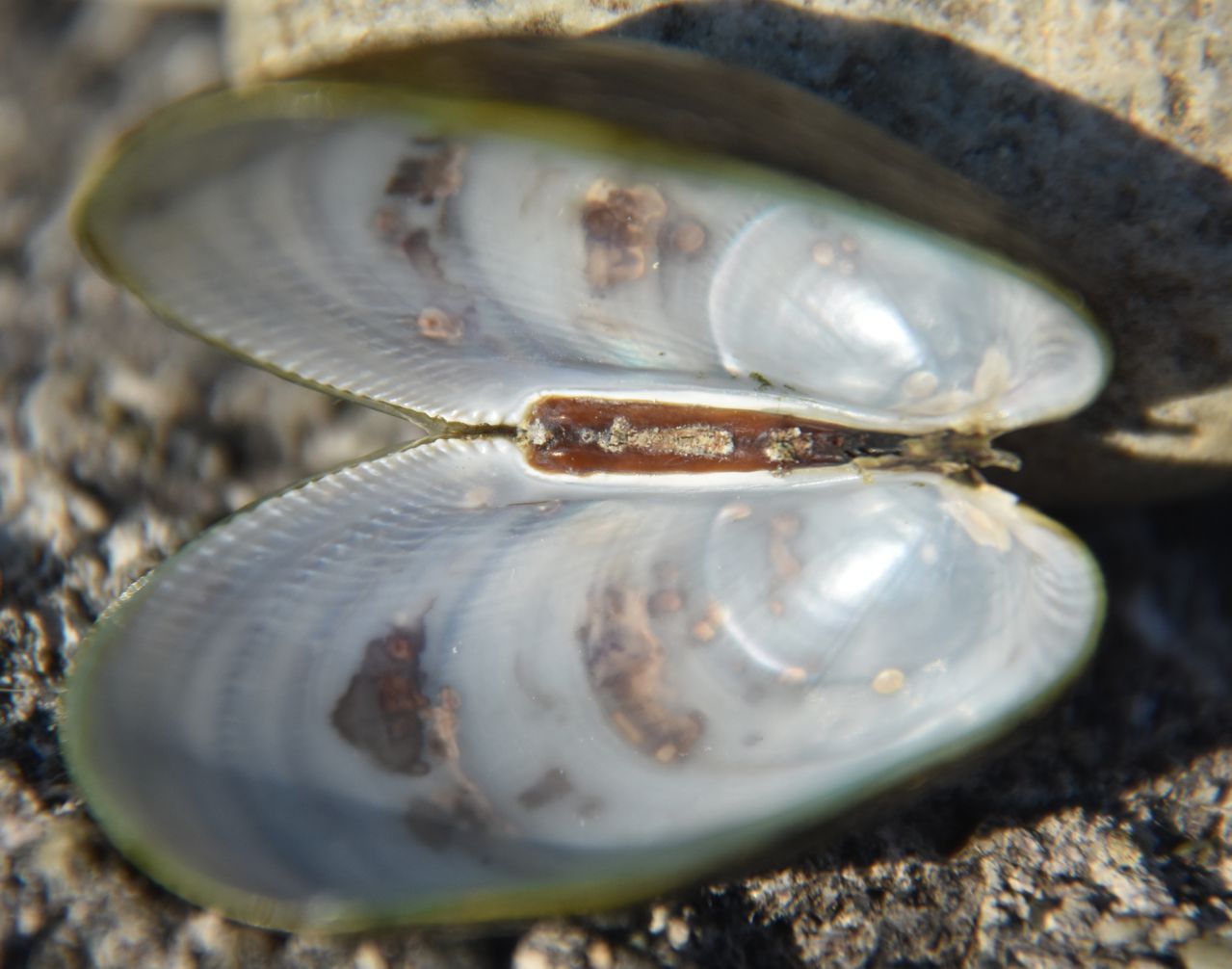 |
| This photo shows the pearly inside, what appears to be just one, large anterior adductor muscle scar, some of the fine radial ridges that look like taxodont dentition along the dorsal margin, and the internal hinge ligament. The large oval scar at the anterior end (to the right in this photo) appears to me to be the only obvious adductor muscle scar-the anterior one; but the paired dark spots nearer the center of the valve may be the anterior and posterior adductor muscle scars instead. |
 |
| Here the posterior radial ridges are visible inside the valve. The periostracum appears to be slightly folded over the valve margins. The same radial ridges are visible externally on the valves. |
 |
| Here are the internal radial ridges on the anterior end. The periostracum appears slightly folded here also. Dorsal is up. |
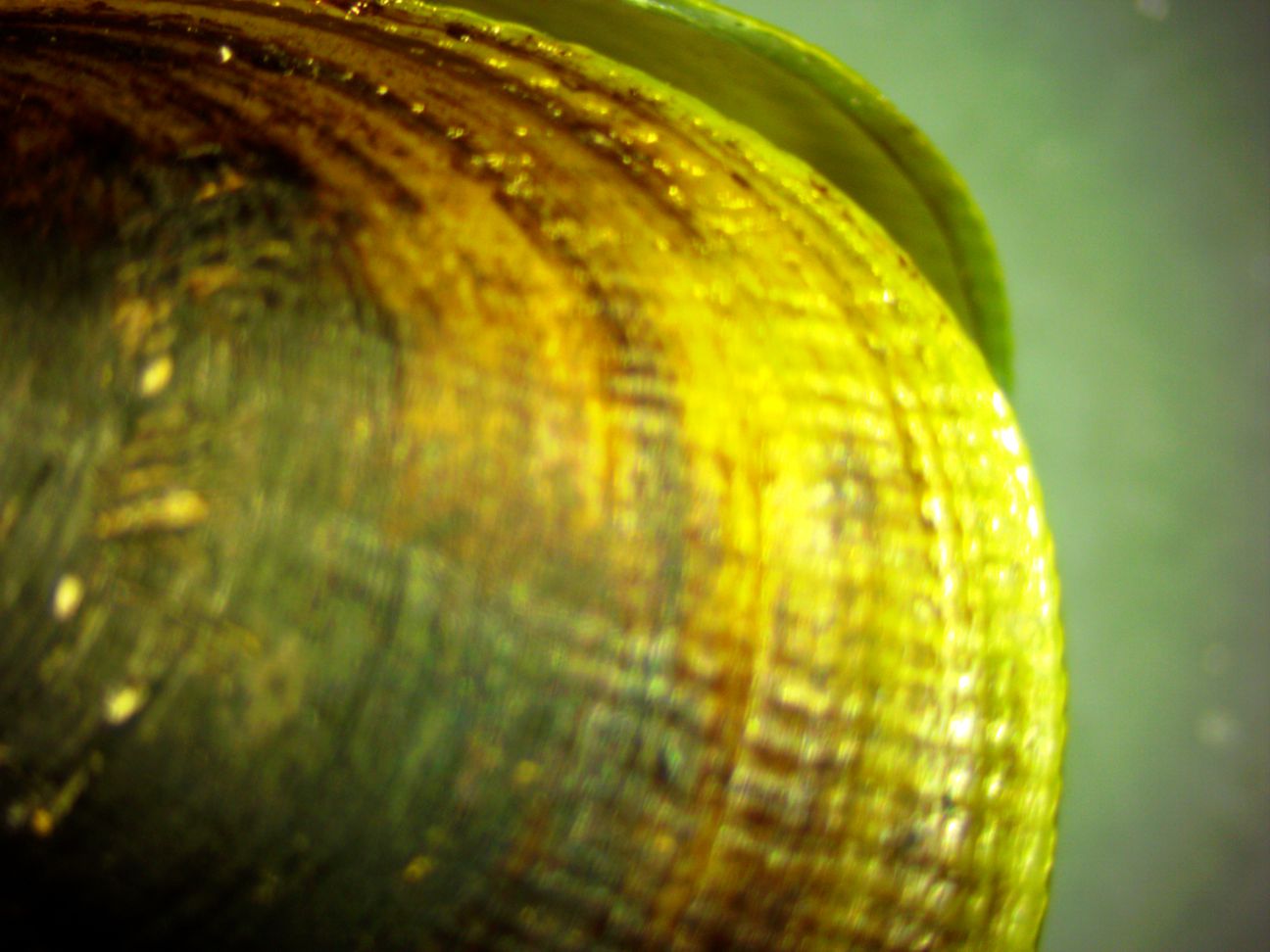 |
| The ridges are visible as radial ridges on the external surface as well, as seen here on the posterior end. Both radial ridges and concentric growth lines are present. |
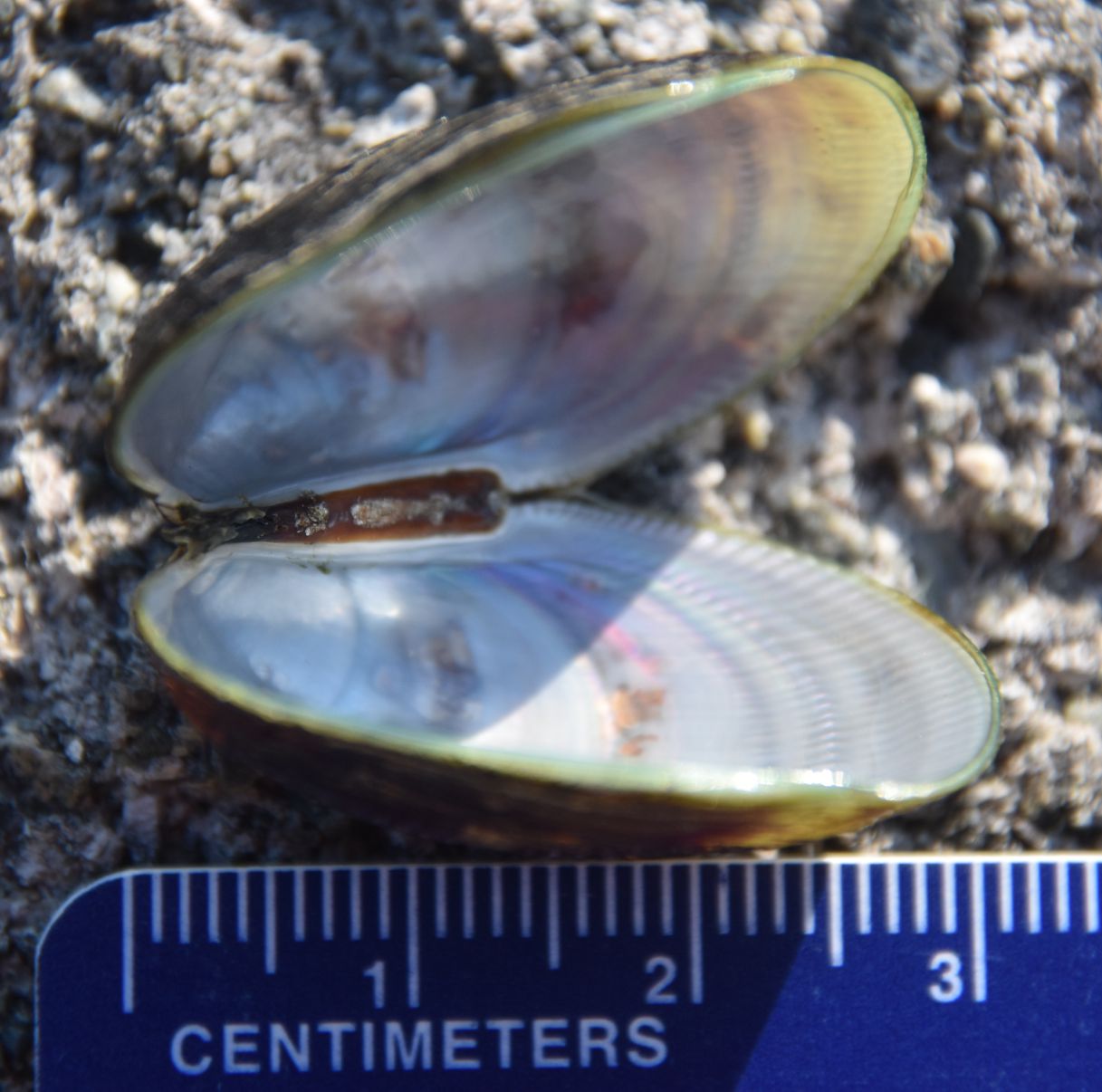 |
| The valves are 3 cm long and 2 cm high. |
Authors and Editors
of Page:
Dave Cowles (2026): Created original page
CSS coding for page developed by Jonathan Cowles
Salish Sea Invertebrates web site provided courtesy of Walla
Walla University