Dicyemid sp (Rhombozoan) from Octopus rubescens kidneyCommon name(s): Rhombozoan |
|
| Synonyms: | 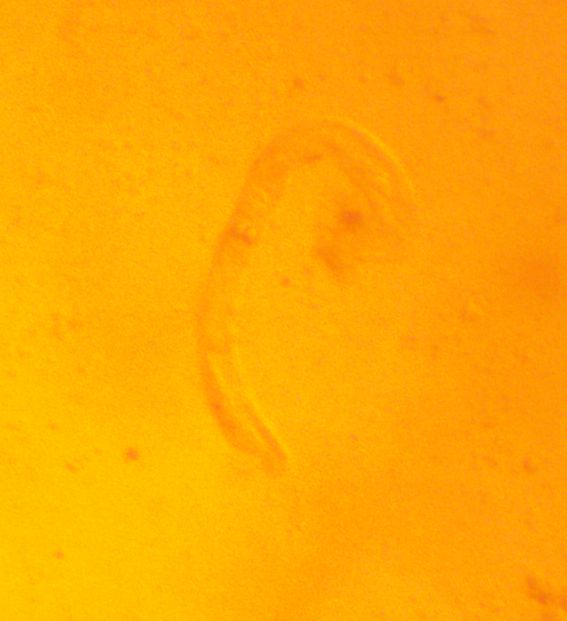 |
|
Phylum Dicyemida (Rhombozoa) |
|
| A Dicyemid nematoform adult about 1 mm long. Isolated from a kidney of Octopus rubescens. | |
| (Photo by: Dave Cowles, June 2026 ) | |
Description:
Dicyemids (Rhombozoans) are a phylum of obligate symbionts (perhaps parasites) inside cephalopod
kidneys. The wormlike adults occur in two forms: Nematoform adults are
wormlike, with a few dozen outer cells and one long inner cell. The
inner (axial) cell buds asexually to form "vermiform" embryos, which do
indeed look like worms and swim actively around in the kidney. When the
vermiform embryos mature they can become nematoforms or rhomboforms,
which look similar to nematoform adults but are hermaphrodites which
reproduce sexually. The embryos from rhomboform adults are called
"infusorigen" embryos. Instead of swimming around inside the kidney
they leave the host and in some unknown manner locate and infect
another cephalopod individual. In the new host they can grow up to be nematoform adults.
How to Distinguish
from
Similar Species:
I do not know of other similar-appearing symbionts which can be found abundantly in cephalopod kidneys.
Geographical Range:
Most common in cool marine waters.
Depth Range:
Habitat:
Inside cephalopod kidneys, especially benthic octopuses.
Biology/Natural
History:
The adults tend to hang onto the kidney tissues via an "apical cap"
which is inserted into the kidney tissue, but they can also swim around
as seen below.
| Return to: | |||
| Main Page | Alphabetic Index | Systematic Index | Glossary |
References:
Dichotomous Keys:
Kozloff, 1987, 1996
General References:
Scientific Articles:
Web sites:
General Notes and
Observations: Locations,
abundances, unusual behaviors:
Other photos and movies of nematoform adults:
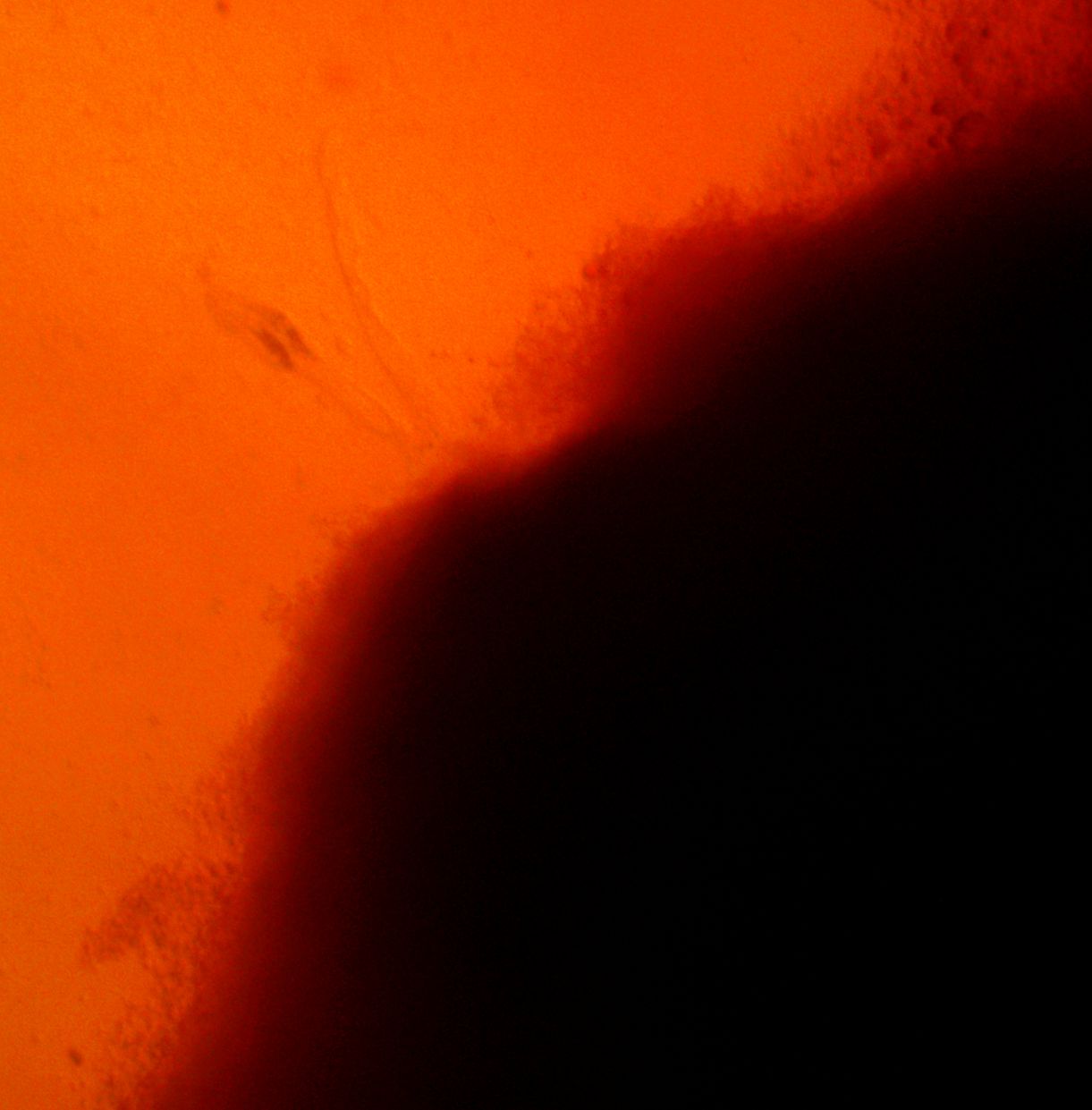
This photo shows several dicyemids attached to the kidney tissue.
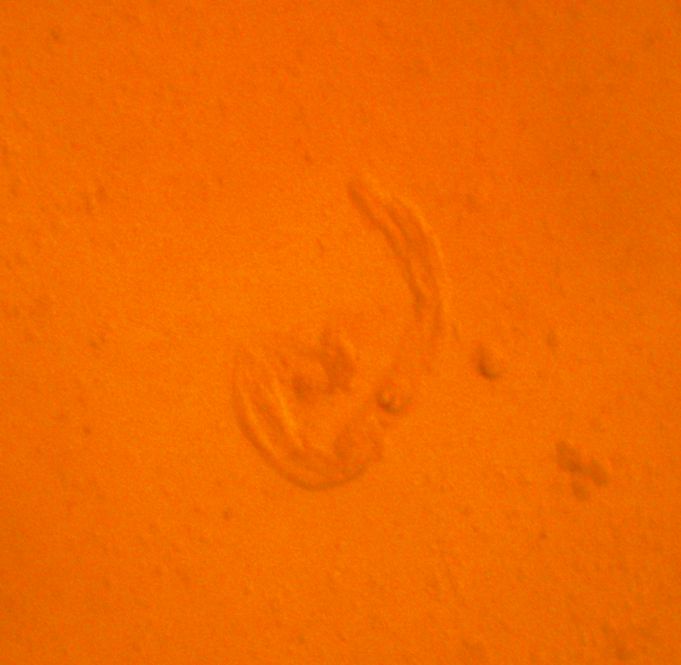
An individual swimming. Click on this image to watch a movie of several individuals swimming.
Click here to load a short movie of several nematoform individuals swimming.
Authors and Editors
of
Page:
Dave Cowles (2025): Created original page
CSS coding for page developed by Jonathan Cowles
Salish Sea Invertebrates web site provided courtesy of Walla Walla University